
UWB began it's modern life with short-range, high-speed data communications use cases
In 2002 the FCC allowed UWB to communicate in an unlicensed fashion with strict spectral power density requirements in the 3.1 to 10.6 GHz bands.
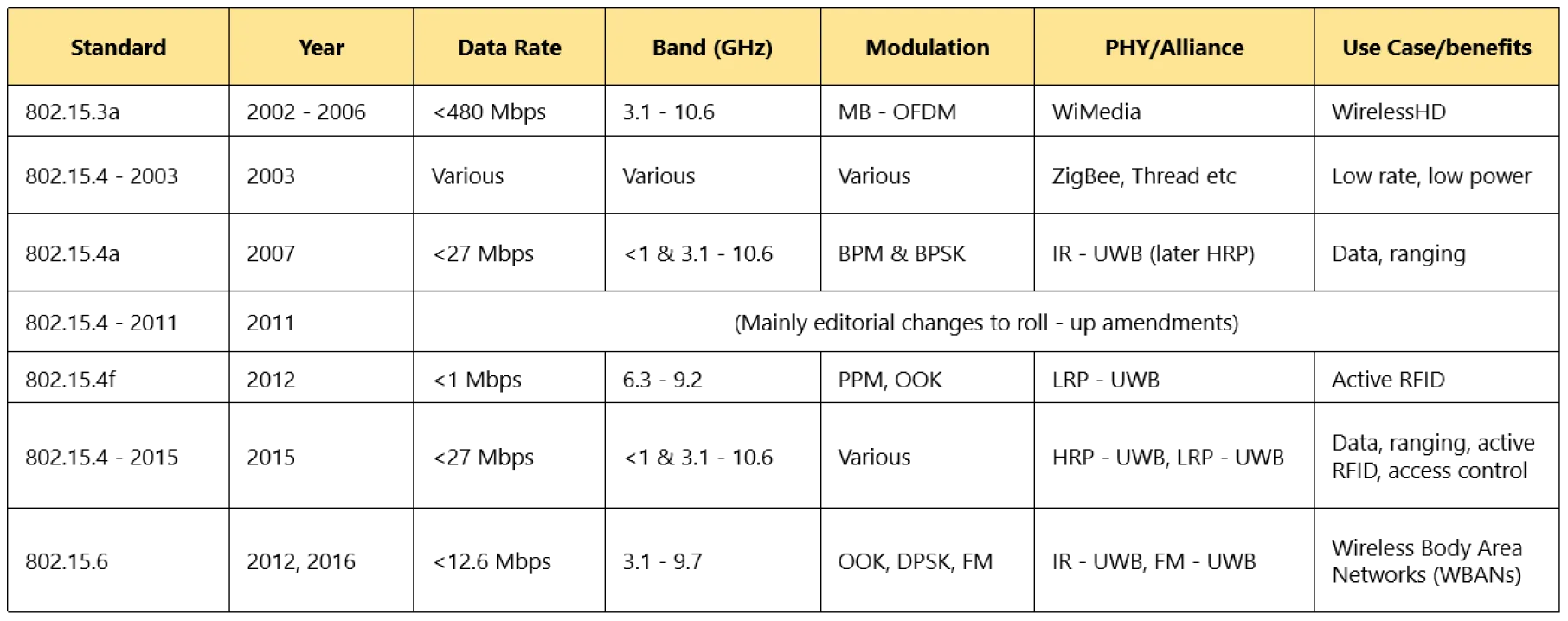
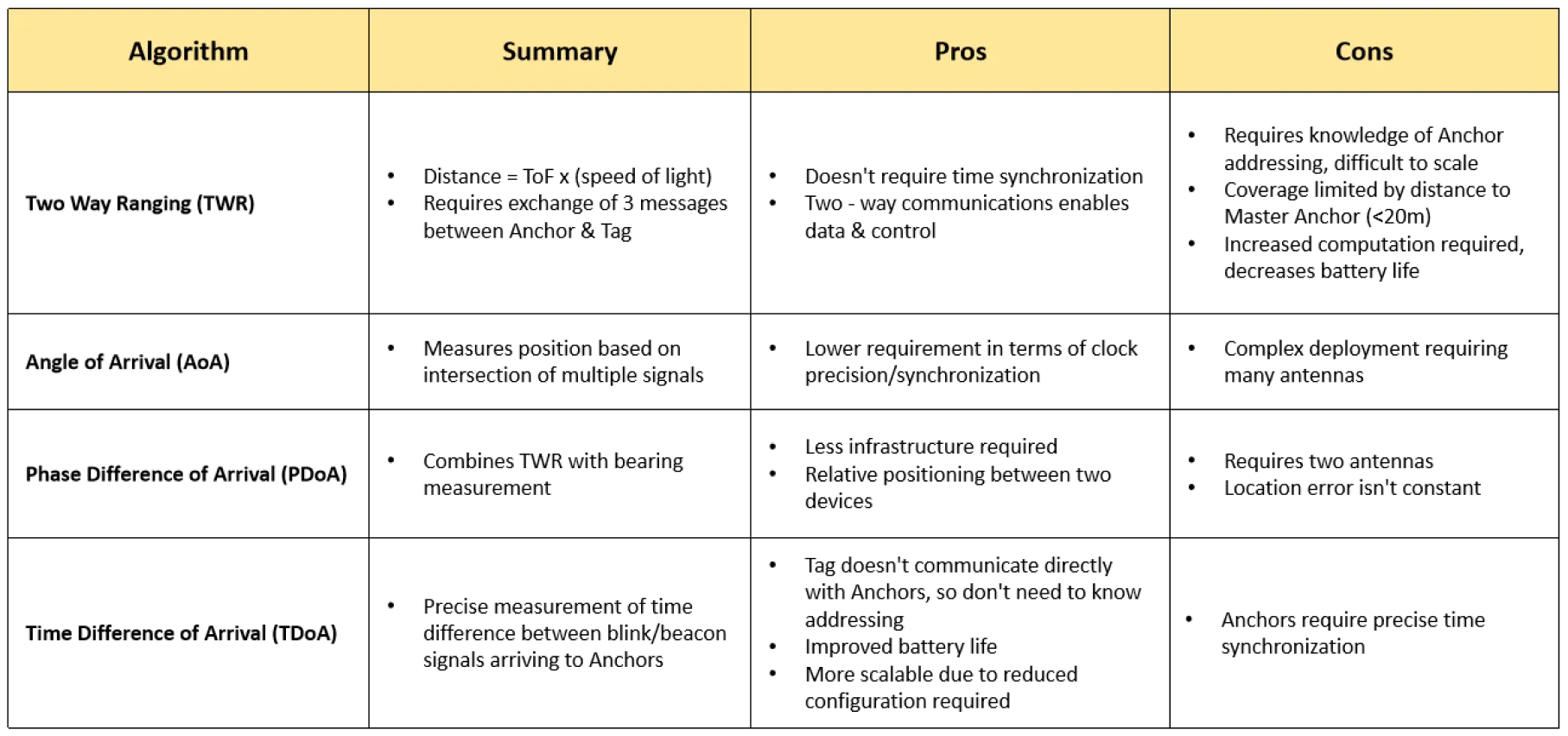
The Woxu’s RTLS platform is based on the DW1000 Integrated Circuit chip from DecaWave. The chip utilizes the Ultra Wideband technology in order to bring decimeter level positioning to the market. Unlike traditional radio technologies (like Bluetooth or Wi-Fi), UWB operates with the signal’s so-called Time of Flight rather than RSSI (Received Signal Strength Indication), which makes the technology much more precise and enables it to make very exact ranging measurements. This opens up new opportunities in several business verticals, that have simply not been possible before.
High localization precision (decimeter-level)
No interference with other radio communication systems
Resistant to multipath signal propagation
Resistant to noise
Use of low power transceivers
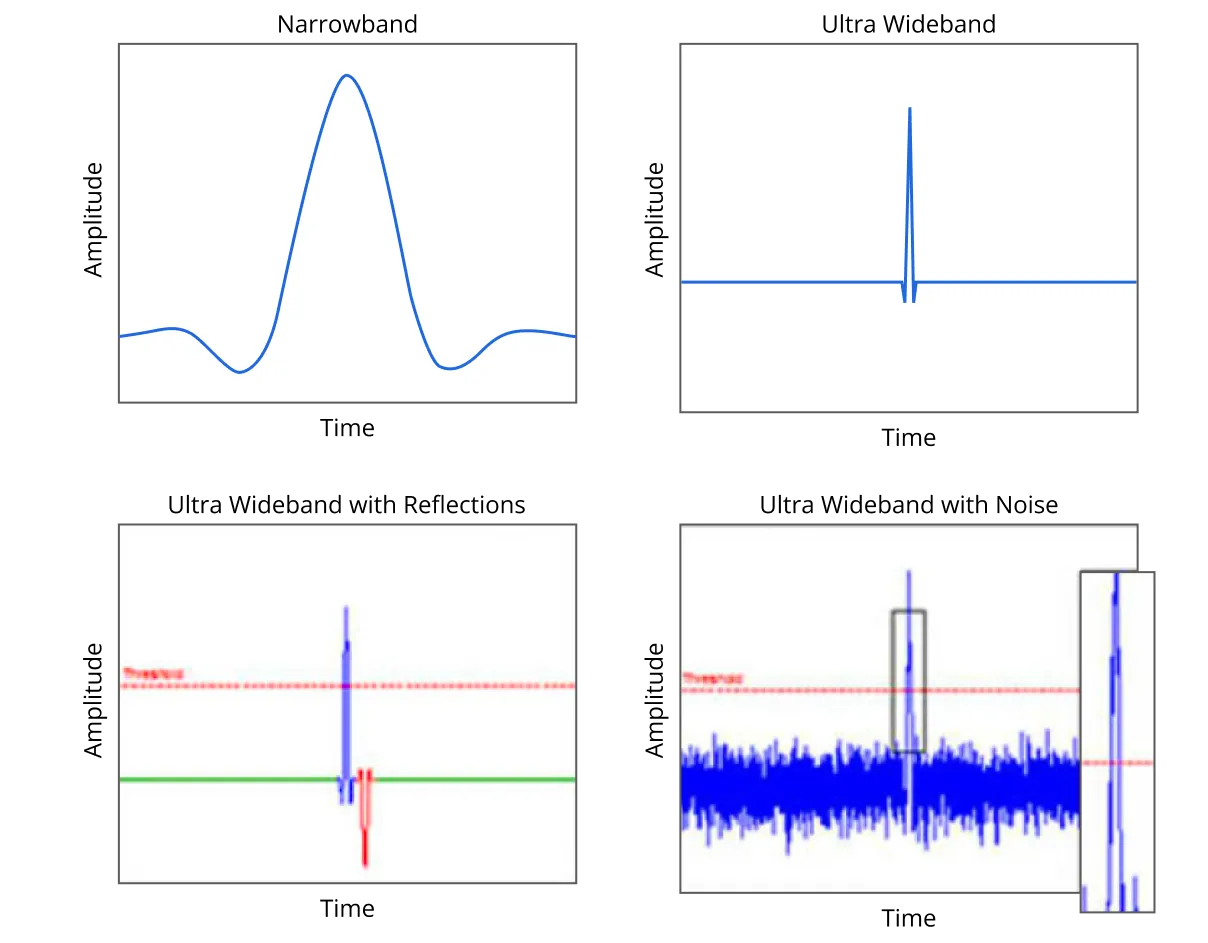
UWB utilizes a train of impulses rather than a modulated sine wave to transmit information. This unique characteristic makes it perfect for precise ranging applications. Since the pulse occupies such a wide frequency band, its rising edge is very steep and this allows the receiver to very accurately measure the arrival time of the signal. Plus the pulses themselves are very narrow, typically no more than two nanoseconds. Due to the nature of the signals, UWB pulses can be distinguished even in noisy environments, plus the signals are resistant to multipath effects. All of these traits give UWB big advantage over traditional narrowband signals in case of ranging capabilities. Also due to the strict spectral mask, the transmit power lies at the noise floor, which means that UWB does not interfere with other radio communication systems operating in the same frequency bands, since it just increases the overall noise floor, a principle that is very similar to spread spectrum technologies (CDMA).
This website uses cookies to ensure you get the best experience on our website.